| URBAN DESIGN
Public space is the lifeblood of the city. Every seat, pathway and open space carries the potential to enrich how we meet, pause, and imagine together.
Partnerships inlude the Centre for Accessible Environments, What If? Projects and London Borough of Havering.
Romford Ring Road
Cities are never still. Their streets and squares shift with the tides of movement, the choreography of work, trade, and transit. Within these restless flows there is the possibility of connection. Greening the Romford Ring Road was one such moment of possibility, undertaken with What If? Projects and the London Borough of Havering.
Romford, with its long history of trade and settlement, continues to gather people around its historic market. Yet the market is encircled by the ring road—an anatomy of cars and tarmac, where the pedestrian is too often pushed to the margins.
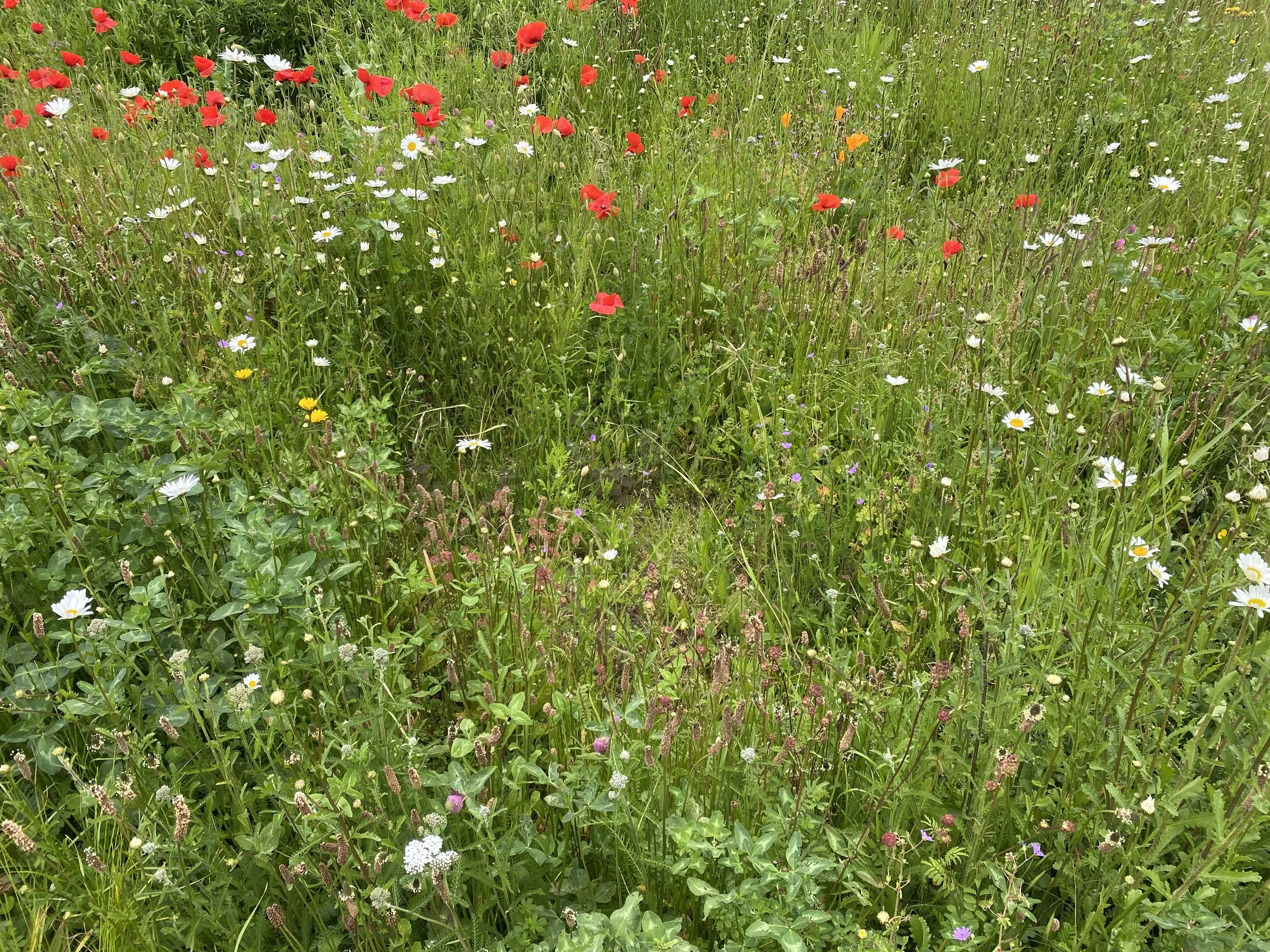
The brief was to imagine how this hard-edged infrastructure might soften and ‘green’. Together, we developed a detailed planting plan for the entire Ring Road and, with Richard Scott of Landlife, proposals for bringing wild flowers to the road about and fragments of green spaces between the pavements and highways.
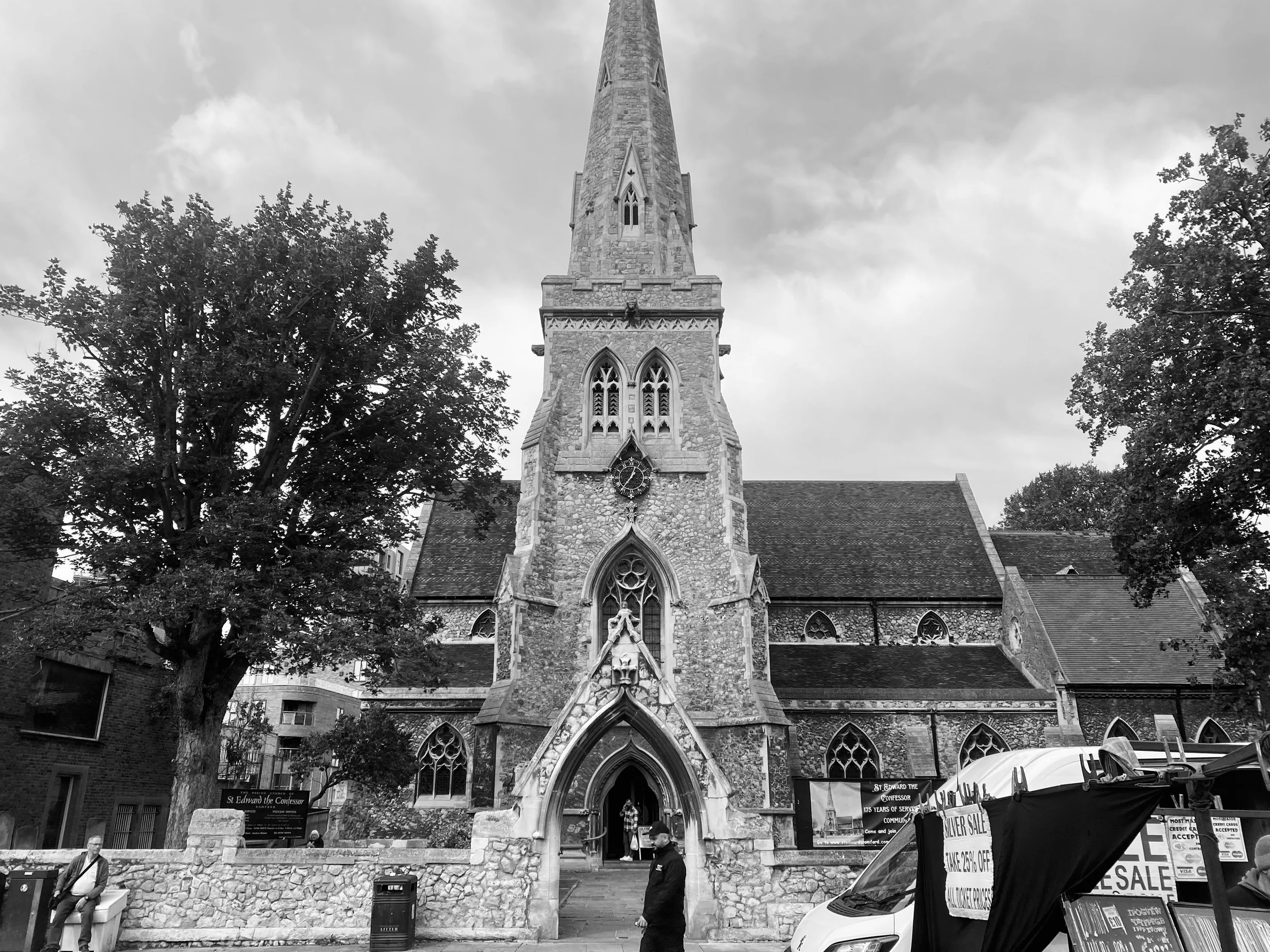
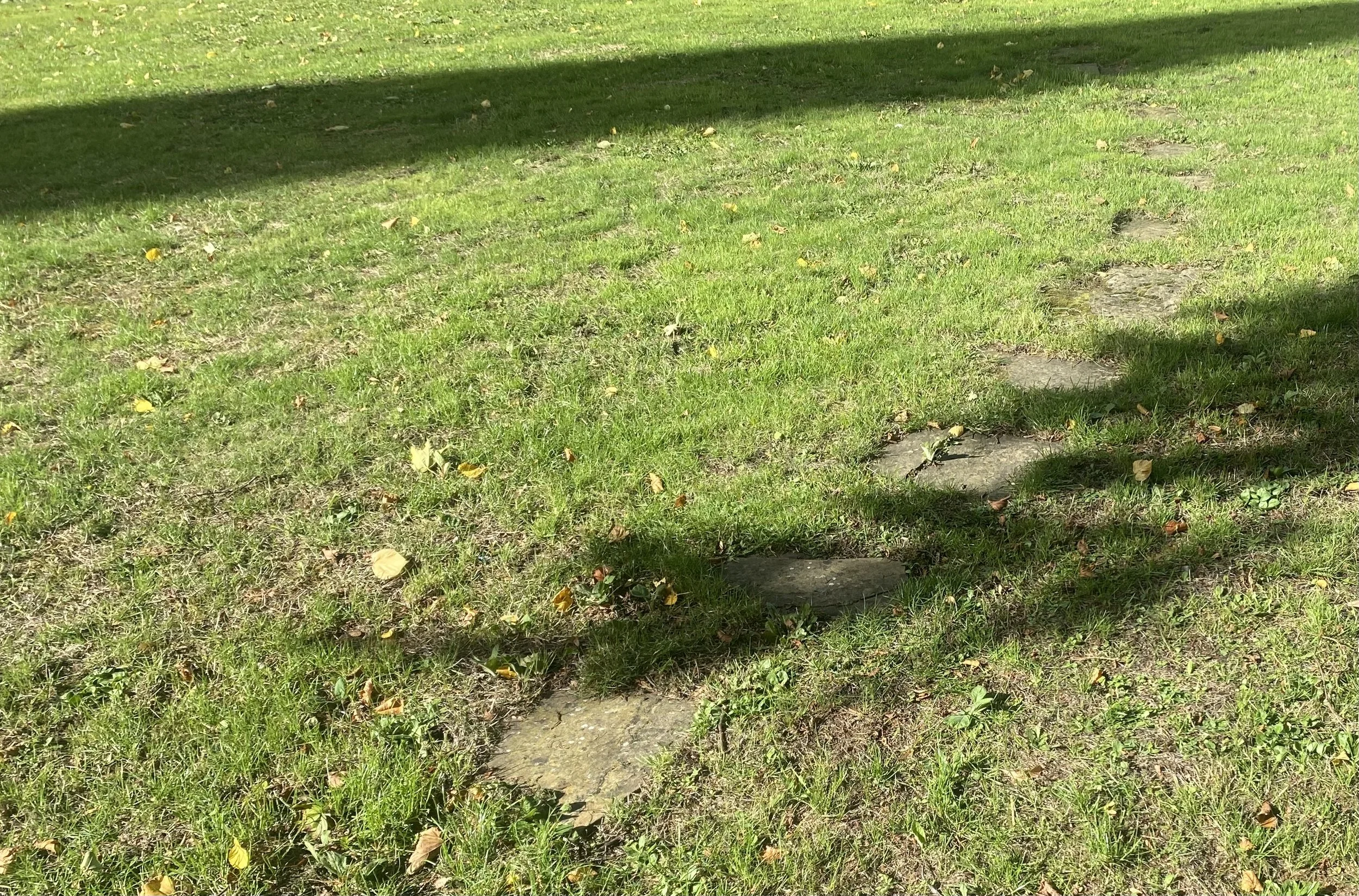
At the heart of this vision lay St. Edward the Confessor’s churchyard. At first glance, it appeared an unused pocket, a quiet fragment overlooked by the rush of the city. But in listening, we began to hear the stories it held: of communities seeking a place to breathe, children looking for somewhere to play, older generations looking for a site of rest and contemplation. We also learnt of the many thousands of people buried in its churchyard in unmarked graves.
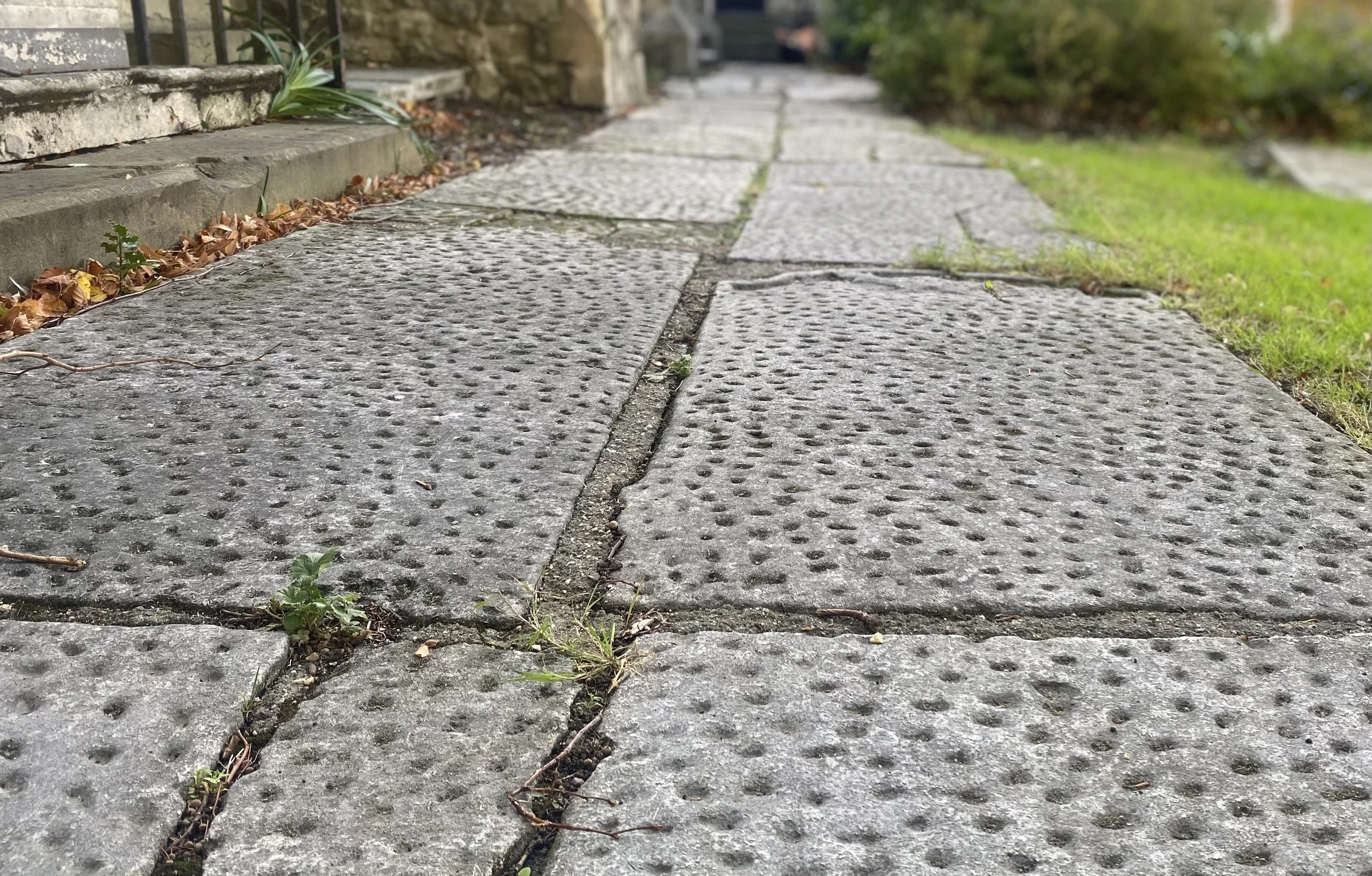
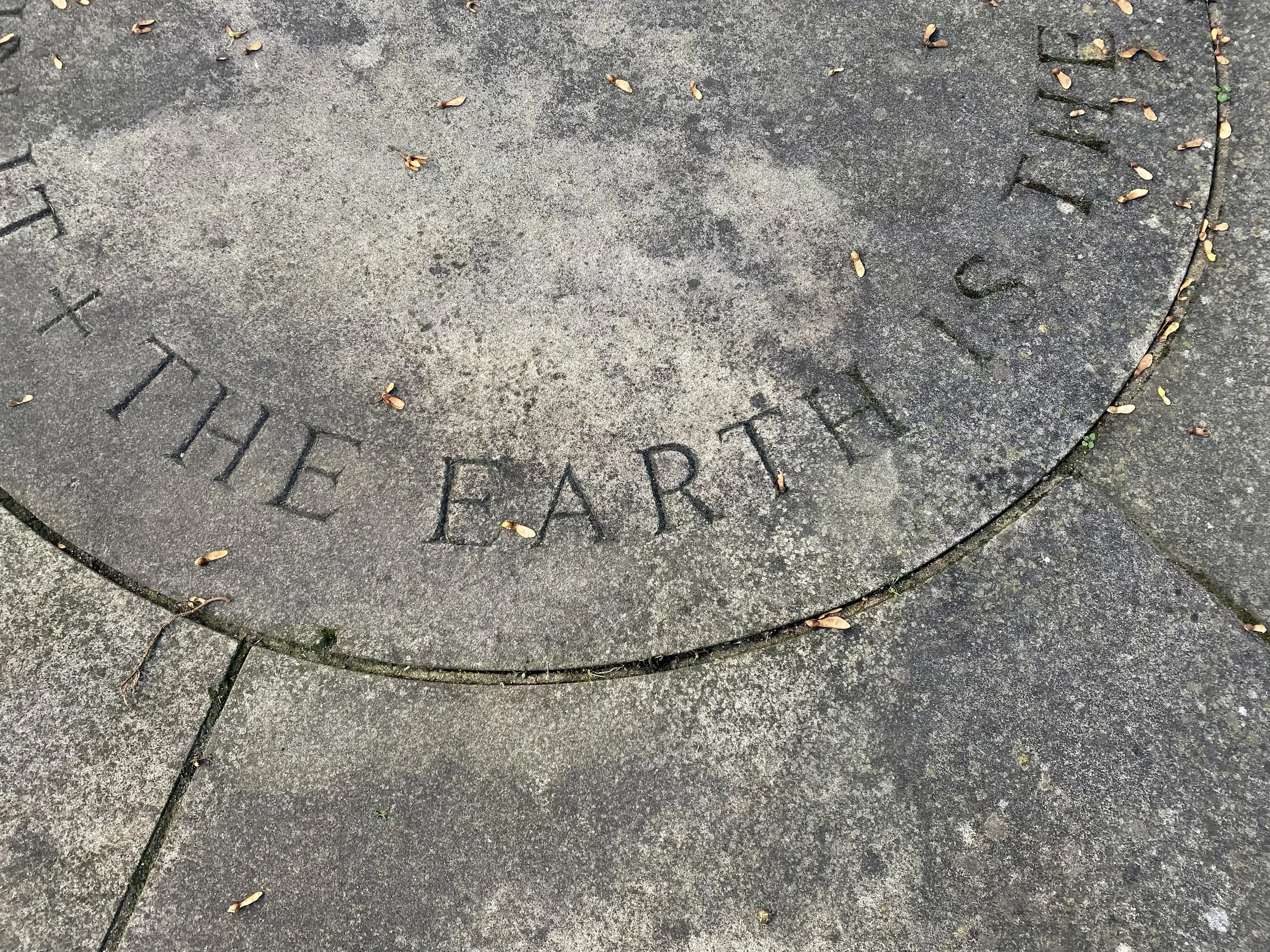
My response was to shape a circle as a simple path of recycled stone —an ancient image of gathering, a form that holds and unites, a way to quietly honour those whose lives were not marked in stone. On this circle we set a herb garden, fragrant with plants for touch, taste, and healing. Words for reflection were carved in the pavers. This simple circuit invites walking, pausing, returning. In its clarity and openness, the circle invites solitude and community, reflection and encounters, play and stillness.