HEALTH
Across healthcare settings, there is a remembering of the healing power of nature. The partners I work with know from evidence and experience that contact with plants, seasons and the elements can shorten recovery times, ease pain and lower stress, for patients and for those who work alongside them. Shaped with clinicians, charities and estates teams, each project is an exploration of how restorative landscape design can support care, dignity and independence, often in settings where nature has too often been left at the margins.
COMMISSIONERS
CHURCHILL HOSPITAL, OXFORD
MAGGIE’S, OXFORD
ROYAL BUCKINGHAMSHIRE HOSPITAL, AYLESBURY
GUY’S & ST THOMAS’ HOSPITAL, LONDON

CASE | MAGGIE’S OXFORD
COMMISSIONER | Maggie’s Cancer Care
PARTNERS | Wilkinson Eyre Architects
Maggie's centres offer a different kind of cancer care. As founder Maggie Keswick Jencks reflected, people shouldn't "lose the joy of living, in the fear of dying". Located in the grounds of NHS hospitals, each centre and garden offers a sanctuary space between the clinical world and a place that feels like home.
For Maggie’s Oxford, I had the honor of collaborating with Wilkinson Eyre Architects to create the landscape around the treehouse centre beside Churchill Hospital. The site is a narrow strip of land along Boundary Brook, looking out across Warneford Meadow—a gift long ago offered to the people of Oxford as a place of recuperation and inspiration.
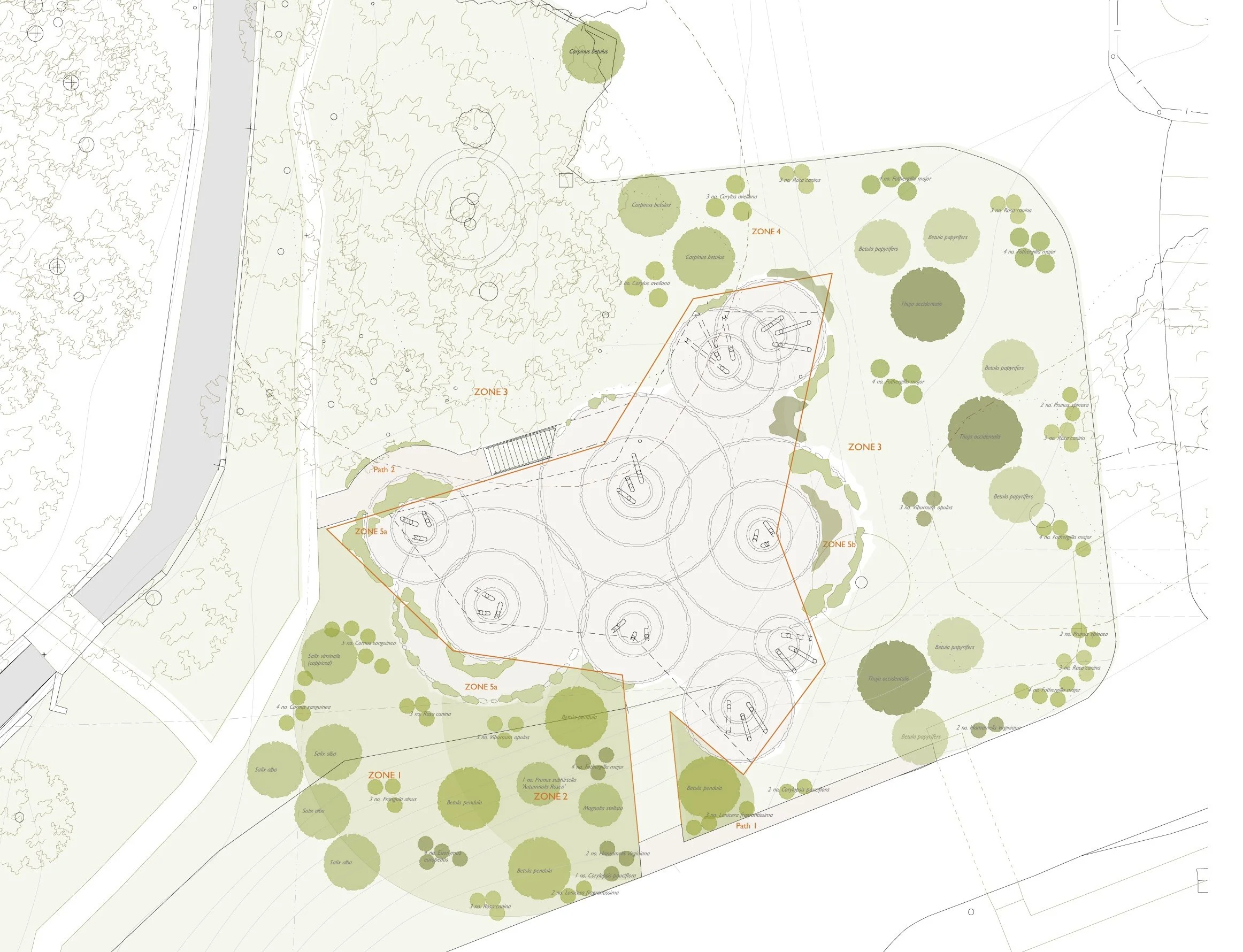
Faced with dramatic level changes and the presence of a magnificent circle of mature trees, the architects lifted the building onto stilts creating a treehouse that made space for nature while opening long, restorative views. The heart of this project lies in this liminality: a threshold space between the dense fabric of the hospital and the open breathing room of the meadow.
I spent time with the brook and the land—listening, drawing, and attuning to its existing character. Meetings with local volunteers who cared for the Boundary Brook and Warneford Meadow helped understand more deeply the challenges of caring for this vital area of wetland within the heart of a city. Time was made to engage wider circles and adults, children and local residents and hear their concerns about water quality, loss of biodiversity and they importance of safe public access.
What emerged was the need for a resilient shrub layer and woodland understorey. Native plants that could stabilize the soil, weave into the wider woodland, and offer an ever-changing abundance for people and wildlife alike. These included a bank of wild dog roses that could offer a wild boundary protection, an abundance of native ferns as well as hazel coppice that echoed the detailed window screens of the main building.
Just as the impact of Maggie’s Centres ripple into the community, this planting was imagined as a seedbed that could help restore the wider woodland setting over time. Above all, the design became a meditation on our place within a greater scheme of life and the cycles that flow within us and throughout the living world.
